What is the difference between a mild, full and plug-in hybrid?
All three combine a combustion engine with an electric motor. The mild hybrid only assists the engine and never drives on electricity alone. The full hybrid drives a few kilometres on electricity and charges itself while braking and driving. Only the plug-in hybrid has a plug and a large battery for longer electric distances.
| Type | Plug | Purely electric |
|---|---|---|
| Mild hybrid | No, often a 48-volt battery | No, assistance only |
| Full hybrid | No, charges itself | A few kilometres |
| Plug-in hybrid | Yes, larger battery | Around 40 to 100 kilometres |
This is how it is described by the TCS in its guide to hybrid vehicles. The abbreviations MHEV, HEV and PHEV stand for the same three types.
Does a hybrid need to be plugged in?
Only the plug-in hybrid. Mild and full hybrids have no charging port; their battery charges when braking and via the engine. A plug-in hybrid keeps going without being charged, but then on its combustion engine and carrying the weight of a large battery it does not use.
According to the TCS, a conventional hybrid cannot be charged from a socket. With a plug-in hybrid, charging decides the consumption. According to Empa, a plug-in hybrid that is rarely charged can even use more than a comparable petrol car because of its battery and electric motor (Empa, 16.07.2026).
How much does a plug-in hybrid really use?
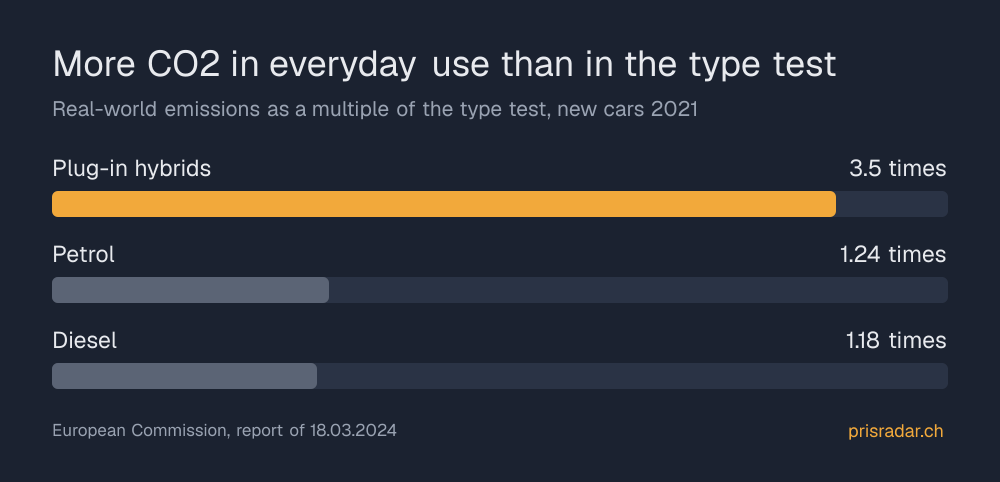
On average, much more than stated. The European Commission analysed the fuel consumption meters fitted in cars. Plug-in hybrids first registered in 2021 emitted on average 3.5 times as much CO₂ in everyday driving as in the type-approval test, around 4 litres per 100 kilometres more. For petrol cars, the gap was 23.7 per cent.
The figures come from the first European Commission report on real-world CO₂ emissions of 18.03.2024. Empa measured twelve current plug-in hybrids at 23 and at minus 7 degrees. Cold, heating and brisk driving cut the electric range sharply, and the combustion engine starts earlier and more often.
Who is a plug-in hybrid worth it for?
For anyone who can charge at home or at work and drives most journeys within the electric range. Those who can rarely charge or often drive long distances will hardly use the large battery. For them, a full hybrid or a petrol car is the simpler choice.
According to the TCS, a full battery is good for around 40 to 100 kilometres. Every kilometre on electricity saves petrol. With an empty battery, the plug-in hybrid runs on petrol and carries the weight of the battery with it.
Without a way to charge, the plug brings nothing. If you want to drive fully electric, you will find prices and battery tips in our guide Buying a used electric car.
How much does a used hybrid cost?
In our analysis, a used plug-in hybrid costs a median of CHF 36’910, a mild hybrid CHF 32’999 and a full hybrid CHF 25’895. All three are, at the median, from 2023. Part of the difference comes from the models available with each type of drive.
| Drive | Listings | Price | Mileage |
|---|---|---|---|
| Plug-in hybrid, petrol | 7’610 | CHF 36’910 | 38’152 km |
| Mild hybrid, petrol | 8’665 | CHF 32’999 | 31’800 km |
| Full hybrid, petrol | 3’176 | CHF 25’895 | 36’775 km |
| Petrol, no hybrid | 67’334 | CHF 19’900 | 91’000 km |
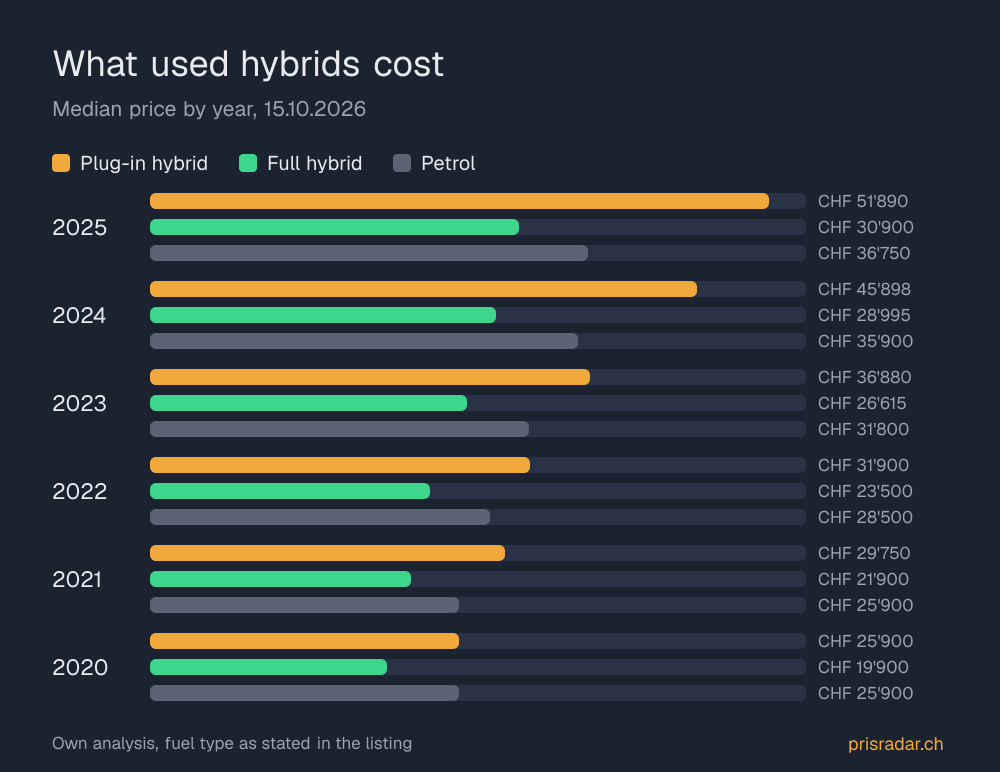
Comparing the same year is fairer: from 2021, a plug-in hybrid costs a median of CHF 29’750, a full hybrid CHF 21’900 and a petrol car CHF 25’900. What your model is worth today is shown by the market value estimate for your hybrid.
How quickly does a used hybrid sell?
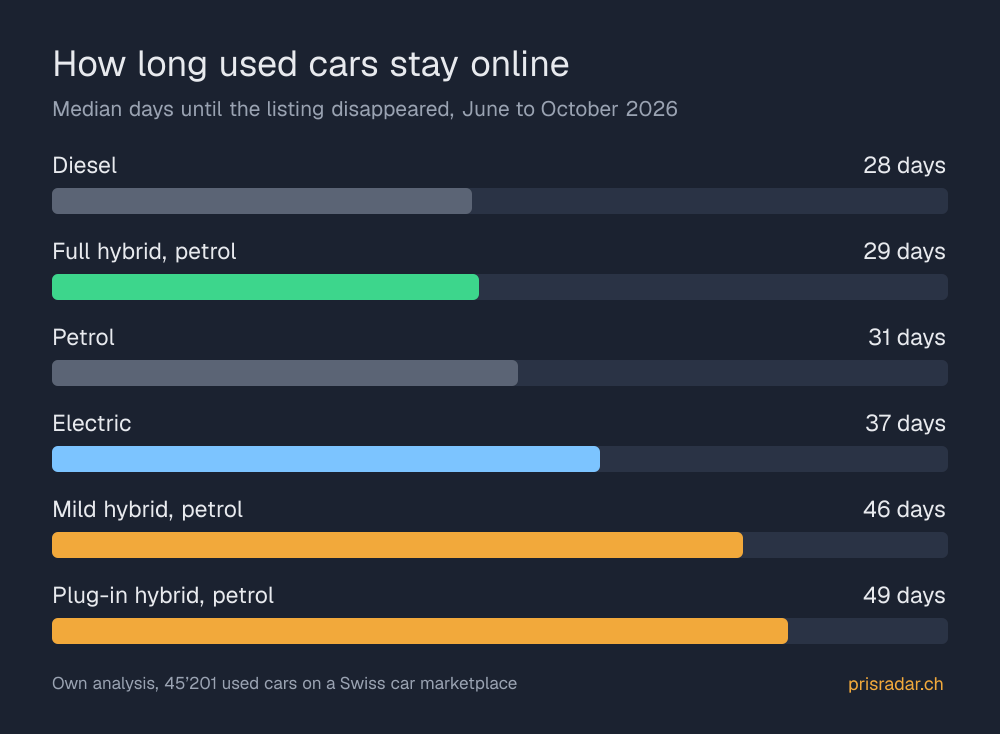
A full hybrid sells as quickly as a petrol car, a plug-in hybrid much more slowly. Listings for used full hybrids stayed online for a median of 29 days, petrol cars 31, mild hybrids 46 and plug-in hybrids 49 days. Measured on all used cars that disappeared from a large Swiss car marketplace in the last 120 days.
| Drive | Days online, median | With a price drop |
|---|---|---|
| Full hybrid, petrol | 29 | 18.5 % |
| Petrol, no hybrid | 31 | 19.5 % |
| Mild hybrid, petrol | 46 | 25.0 % |
| Plug-in hybrid, petrol | 49 | 24.8 % |
One in four plug-in hybrids became cheaper at least once while listed. For buyers, that means room to negotiate; for sellers, patience or a price close to market value. How strongly the price determines the time it takes is shown in our guide on the best time to sell a car.
What should I look for when buying a used plug-in hybrid?
The battery, the charging cable and the warranty. Have the condition of the high-voltage battery measured and check that the charging cable is included. Also ask how long the battery warranty still runs. A test drive with a full battery shows whether the electric range suits your journeys.
The TCS offers a battery test for plug-in hybrids and electric cars that compares the usable energy with the battery when new. Everything else is the same as with any used car: vehicle registration document, service book and MFK status. Write whatever the seller promises about the battery’s condition into the purchase contract with template.